The Vibe Coding Revolution: How To Build Artificial Intelligence Applications in 2026 Using English
Tags: ArtificialIntelligenceApplications, NoCodeRevolution, SoftwareDevelopment2026, VibeCoding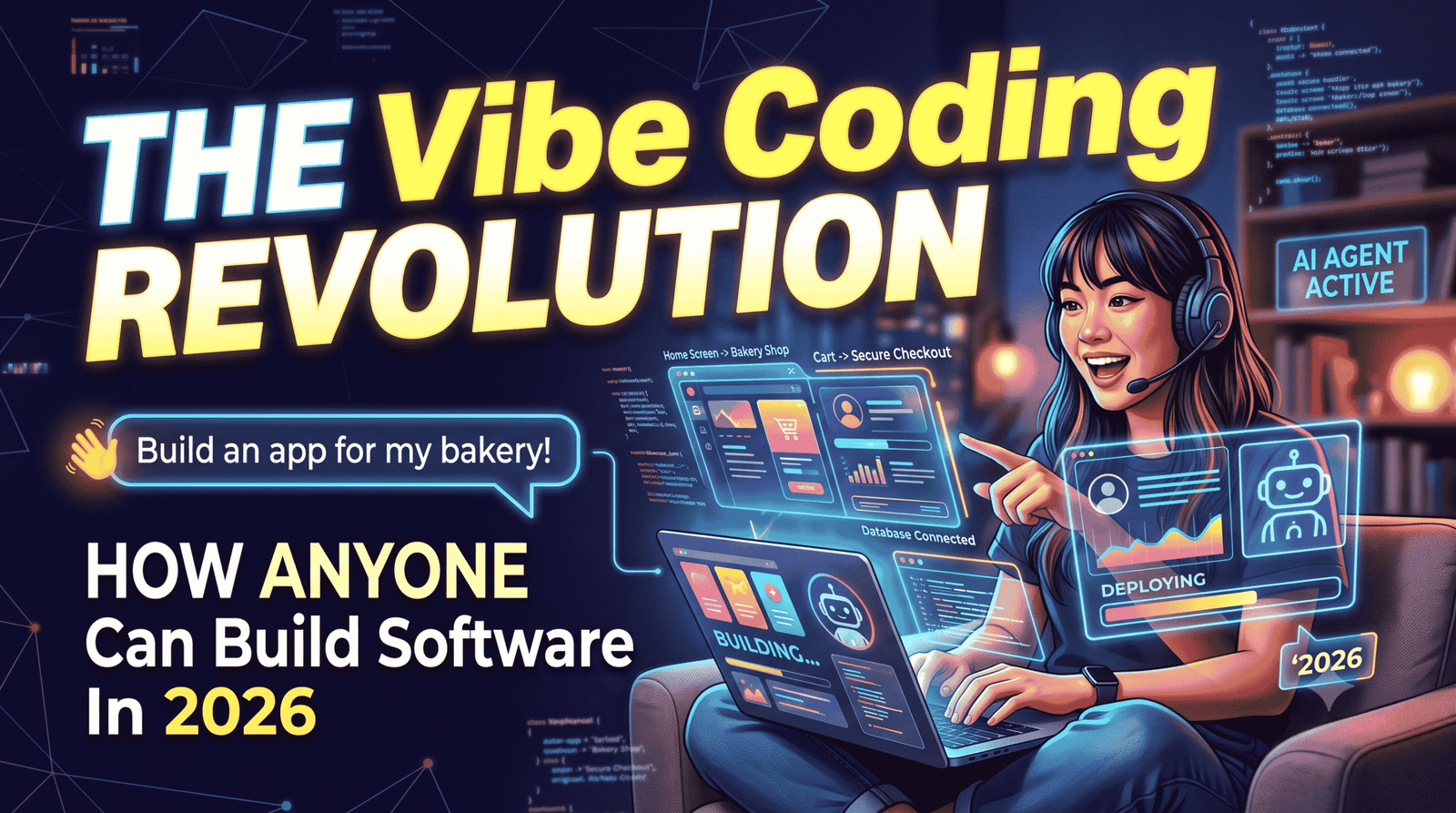
We are officially living in 2026, and the tech world has completely flipped on its head. If you haven’t heard the term vibe coding yet, buckle up. Coined by AI visionary Andrej Karpathy, vibe coding is the absolute democratization of technology. It means you no longer write code lines—you describe what you want in plain, conversational English, and intelligent AI agents build the software for you in real time, you can bulid your own Artificial Intelligence Applications.
Whether you’re a product manager with a killer weekend project idea, a non-technical founder looking to launch a Minimum Viable Product (MVP), or a veteran software engineer tired of typing out boilerplate code, the game has fundamentally changed. Here is how the vibe coding revolution is unfolding right now, and how you can ride the wave.
What is Vibe Coding? (Hint: It’s Not Just “Prompt Engineering”)
When vibe coding first started turning heads a year or two ago, critics dismissed it as a passing fad. They thought it was just people typing sloppy text into ChatGPT and getting broken Python scripts back.
But in 2026, vibe coding meaning has evolved into something much deeper. It represents a total shift from syntax-driven development to intent-driven development.
Instead of opening a code editor and meticulously writing out loops, functions, and database schemas, you talk to an autonomous AI agent. You act as the creative director or the product manager. You say something like: “Hey, build me a clean SaaS landing page with a dark mode toggle, a pricing calculator that changes dynamically, and hook it up to a secure database for user sign-ups.”
The AI agent doesn’t just guess the next line of code. It initiates an autonomous “agent loop.” It thinks through the architecture, creates the files, installs the dependencies, runs background tests to ensure the code works, reads its own errors, fixes them, and deploys the working application directly to the web. You are quite literally developing software based on the “vibe” and intention of your words.
The Best Vibe Coding Tools Dominating 2026
You don’t need a heavy computer setup or a computer science degree to start building today. The software ecosystem has matured rapidly, offering highly specialized platforms tailored to how you want to build.
1. Cursor & Windsurf (The Artificial Intelligence Applications-Native IDEs)
If you are a traditional developer or someone who wants to keep an eye on the source code, Cursor and Windsurf are the gold standards. These are code editors that index your entire project codebase. You can use their agent modes to execute complex, multi-file edits by simply typing out your goal.
2. Bolt.new & Lovable (Browser-to-Production Apps)
For non-technical creators, tools like Bolt.new and Lovable are complete game-changers. You open your browser, chat with the interface in plain English, and watch the platform build full-stack web applications before your eyes. They handle the front-end design, back-end logic, and hosting all at once.
3. v0 by Vercel (The UI Mastermind)
Need a breathtaking web design or an interactive user interface? v0 specializes in turning your text prompts or wireframe screenshots into flawless, production-ready React and Tailwind CSS components instantly.
Vibe Coding vs Traditional Coding: How Do They Compare?
To understand why this is a true revolution, let’s look at how building an application looks today compared to the old-school manual approach:
| Feature | Traditional Software Engineering | Vibe Coding (2026) |
| Primary Input | Manual syntax (Javascript, Python, Go) | Plain English, speech, or screenshots |
| Time to Prototype | Days to weeks | Minutes to hours |
| Error Handling | Manual debugging and stack-overflow searches | Autonomous AI self-debugging loops |
| Core Skill Needed | Algorithmic logic and syntax mastery | System design, logic, and context engineering |
| Best For | Ultra-secure, massive enterprise infrastructure | MVPs, internal business tools, rapid scaling |
The Golden Rules: How to Keep the “Vibes” from Breaking to build Artificial Intelligence Applications
While vibe coding makes you feel like an absolute wizard, it isn’t magic. If you give vague instructions, you will get vague, buggy software. To build reliable Artificial Intelligence Applications that actually scale, the fastest-moving creators follow these strict production rules:
- Always Loop, Never Single-Shot: Don’t expect the AI to build a massive app in one giant prompt. Treat it like a highly capable intern. Build the foundation first, test it, and then add features piece by piece.
- Master “Context Engineering”: AI agents don’t fail because your prompt is bad; they fail because they lack context. Always feed your agent the specific business logic, target audience, and existing architectural constraints.
- Implement Autonomous Testing: Ensure your AI agent writes unit tests alongside the code. If the code breaks during a future update, the testing loop will catch it automatically.
- Keep Humans in the Loop for Critical Paths: If your app handles user payments, passwords (auth), or highly sensitive personal data, always review those specific sections carefully.
Why You Must Embrace the Autonomous Engineering Era
The traditional barrier to entry for software creation has dissolved. We are seeing a massive explosion of indie hackers, boutique startups, and creative thinkers launching global software solutions with teams of just one or two people using Artificial Intelligence Applications.
Vibe coding isn’t about replacing human intelligence—it’s about amplifying it. It frees you from the boring, repetitive task of writing boilerplate code so you can focus entirely on what truly matters: user experience, brilliant architecture, and solving real-world problems.
So, what are you waiting for? Stop overthinking the code, load up a browser agent, and start building Artificial Intelligence Applications ideas today. The vibes have never been better.
To see a real-world perspective on how this paradigm shift is evolving from pure coding into deep system orchestration, check out this insightful discussion featuring Andrej Karpathy on Vibe Coding and Agentic Engineering, where he breaks down why understanding the underlying system remains the ultimate superpower in the age of automation.